

You Don’t Need That
Stop buying STUFF. It's Travel Anxiety Weighing You Down

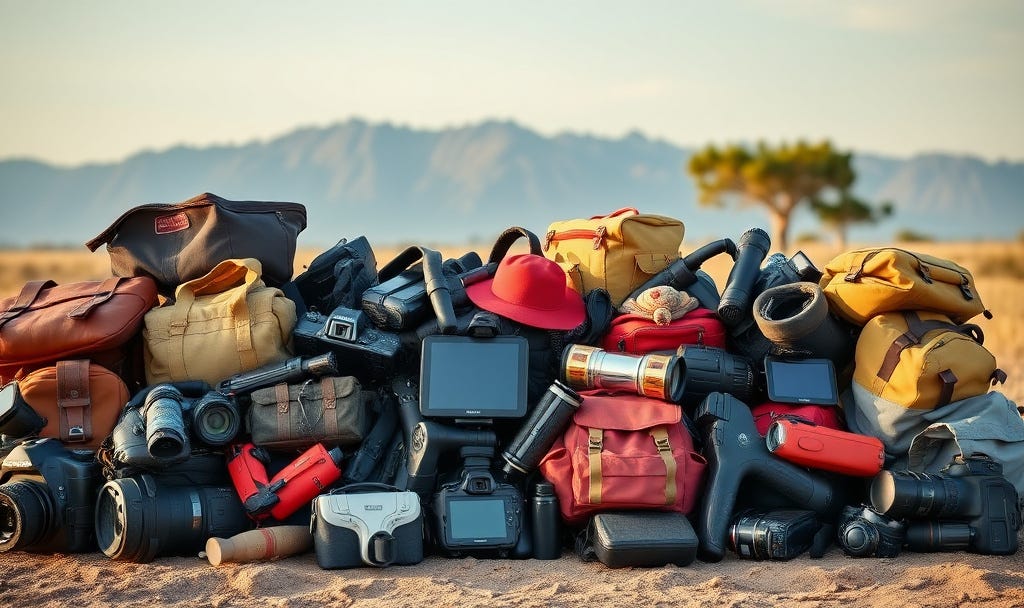
In my previous Substack post, we explored the psychological anxiety that causes us to treat our suitcases like safety blankets. I’m not saying it’s you, but it may be you and it’s definitely me. Stuff makes us feel safe in an uneasy situation.
Today, I want to take that conversation a step further. We need to look directly at that stuff and the industry that feeds this anxiety. Let’s identify the specific items that are quietly inflating the weight of your luggage.
If you have watched my packing breakdowns on my Youtube channel or read my guide on Weighing Travel Gear on the blog, you know my baseline goal: your carry-on bag should weigh between 15 and 16 pounds (about 7 kilograms). This threshold allows you to navigate a sudden train platform change, walk easily over cobblestones, and manage stairs without physical strain.
Yet, many travelers still struggle to meet this target weight because they fall into the travel stuff trap.
You Don’t Need More Stuff: Why Gear and Clothing Companies Miss the Mark
Travel gear and clothing retailers often design products based on hypothetical travel anxiety rather than real-world utility. They specialize in creating single-use solutions for micro-problems you are unlikely to encounter, resulting in suitcases filled with unnecessary accessories and heavy synthetic fabrics.
The Problem with “Travel Clothing”
Traditional travel catalogs frequently feature specialized garments equipped with dozens of hidden pockets, zip-off components, and technical utility loops. While these features are practical for backcountry trekking, they are unnecessary for urban travel in destinations like Paris, Rome, or Madrid. Even safaris don’t need the level of technical gear that travel catalogs suggest. More importantly, these designs can make you awkwardly stand out. You don’t need a safari hat and vest with a million pockets in Venice.
The industry also misses the mark with materials. Retailers heavily market synthetic, “wrinkle-free” fabrics like dense polyester blends or thick Ponte knits. While these garments resist wrinkling, they are heavy. A single technical travel dress can weigh more than three standard linen or lightweight cotton tops combined. Synthetics also tend to trap body heat and retain odors quickly. Ask me how I know.
The reality is straightforward: the best travel clothes are likely already in your closet. Lightweight, natural fibers like cotton, linen, silk, or fine merino wool are breathable, comfortable, and easy to wash in a hotel sink. Things you already wear that make you feel comfortable and confident are all you need in most situations.
The Illusion of Optimization
I once had a set of packing cubes that had the combined weight and bulk of a pair of jeans. How is this optimization?
Don’t get me wrong, I like packing cubes, but not everything needs a pouch or sleeve. Gear companies promote the idea that every personal item needs a specialized protective case, or an organizational cube. This creates “pouch bloat.” By the time you purchase dedicated nylon wraps for your shoes, electronic cords, and toiletries, the organizing gear itself can consume up to two or three pounds of your total weight budget.
If you love being hyper-organized, ziploc baggies are lighter, cheaper, and do the same job.
To achieve a truly footloose and fancy-free travel life, look past marketing claims, use objective data, and eliminate items that fail to earn their place in our bags.
You Really Don’t Need This: 10 Useless Gear Items
There are some things you just don’t need, and I’ve got a list. So many things that have been sent to me as samples, I see my guests carrying, or I read about online. It’s a flooded market.
Long-term travel forums, gear review archives, and real-world feedback from experienced travelers reveal a clear pattern of highly marketed items that provide little to no practical value on the road.
1. The U-Shaped Travel Neck Pillow
Whether made of memory foam, micro-beads, or plastic inflatables, the traditional U-shaped neck pillow is a structural nuisance. It occupies a large amount of physical volume in or on your bag. You must transport this bulky item through train stations, museums, and hotels for weeks just to use it for a few hours on a transatlantic flight.
The Alternative: Use a lightweight, oversized pashmina scarf. You can roll it around a soft sweater to create adjustable neck support, and it functions as a wardrobe layer during chilly evenings.
2. RFID-Blocking Wallets and Passport Protectors
This was a reader question last week that warrants research, which I did. The market is filled with stiff, metallic, specialized wallets designed to prevent electronic pickpocketing. However, digital security data shows that the threat of street-level digital skimming of credit cards or passports is virtually non-existent. Modern cards use encrypted chips, and pickpockets generally target physical cash, cards, or smartphones. These wallets add unnecessary stiffness and bulk to your pockets.
3. Travel Clotheslines
The classic twisted-rubber travel clothesline promises easy drying anywhere. In reality, the suction cups fail to adhere to the porous tiles, matte stone, or textured wallpaper common in historic European hotel bathrooms. If you attempt to anchor them using the attached hooks, you risk pulling down fragile towel bars or curtain rods. Instead, do a small amount of laundry each day before bed and hang it in the shower. If you’ve got enough laundry for a clothesline, it’s time for an adventure to the local laundromat (which can be a fun cultural moment.)
By the way, hoteliers HATE when guests do a ton of laundry and hang it all over the room or on the balcony. You wouldn’t hang wet stuff on your own wooden furniture or on your front porch, would you? Keep wet laundry in the shower or on the towel rack. Your hotel staff will appreciate it.
4. Passport Holder
I genuinely don’t understand passport wallets. When you need your passport, you’ll always be asked to remove it from a wallet. What’s the point? Because it’s pretty? You don’t need the bulk, and if you really wanted to protect it, you’d do better to put it in a ziploc bag.
5. Tactical Headlamps
High-lumen tactical headlamps are overkill for mainstream travel. Unless you are exploring unlit caves or navigating dark rural paths at night, they are unnecessary. The built-in flashlight feature on your smartphone is more than powerful enough to guide you through a dimly lit hotel corridor or help you locate an item in your bag after dark.
6. TSA-Approved Luggage Locks
This is something I have never understood. Standard TSA-approved locks are thin and offer minimal security. A basic ballpoint pen can easily pierce and bypass a standard suitcase zipper track, allowing entry without disrupting the lock. Furthermore, if airport security requires a manual inspection and the master key fails, they will simply cut the lock off.
The Alternative: Keep your valuables—medications, electronics, and documents—in your daypack with you. Use simple plastic zip ties or small safety pins to secure your main luggage zippers against casual, opportunistic hands in crowded transit hubs.
7. Microfiber Travel Towels
Travel stores market ultra-compact microfiber towels because they dry quickly. However, there are two major drawbacks: the texture can feel unpleasant against the skin, and the synthetic material retains a stubborn, sour mildew odor after a few uses. Standard hotels, bed and breakfasts, and apartment rentals provide fresh linens, making a personal towel redundant.
8. Money Belts
Thick canvas or heavy nylon money belts worn around the waist like a medical binder are outdated. When filled with a passport and cash, they create a visible, bulky silhouette under your clothing, signaling that you are carrying valuables. They are also hot and awkward to access when paying for items. I’ve seen so many people wear them on the outside of their clothes, which is way worse than using pockets.
I’ll be honest with you. I was required to wear and teach wearing of money belts when I worked for Rick Steves. I never did unless I had a huge amount of cash on me. This kind of thing did make sense back in ye olde days when we used traveler’s cheques, but times have changed. These days, I carry a sturdy cross-body bag with a pouch attached on the inside with my valuables.
Like most women, if I have something I’m really worried about, I stick it in my bra.
9. Multi-Voltage Travel Steam Irons
Portable travel irons are heavy, clumsy, and rarely generate enough heat or steam to remove tough wrinkles from stubborn fabrics. They can also pose an electrical hazard in older European buildings with delicate wiring systems. Nearly every hotel will lend you an iron for free, or you can hang your clothes in the bathroom while you take a hot shower to let the steam relax the fabric naturally.
10. Collapsible Mesh Laundry Hampers
Is this a thing? Pop-up mesh baskets take up valuable floor space in compact boutique hotel rooms or cruise ship cabins. When it is time to transition to the next city, folding a spring-loaded mesh basket back down while managing your clothes introduces unnecessary frustration.
The Alternative: Bring a single, feather-light, flat nylon grocery bag or a standard plastic shopping bag to isolate dirty laundry inside your suitcase.
You Probably Won’t Use This: 10 Occasional Items
This category represents the hidden cause of heavy luggage. These items possess genuine utility, but they are used so infrequently that they do not justify their weight. They are the “just in case” items that spend most of the trip sitting at the bottom of your bag.
1. Workout Gear
I am actually talking about myself now. I will often bring exercise leggings, running shoes, or, god forbid, exercise gear on trips. I’ve brought a whole yoga mat with me. Have I used these things? Sometimes. But not enough to justify the weight and bulk. In reality, I am usually getting plenty of exercise by walking all day and am too tired for the gym anyhow.
2. Print Guidebooks
You know I was a guidebook writer for most of my adult life, so this kills me to say. Print guidebooks are such a delight but I usually don’t use them on the road anymore. A single guidebook can weigh over a pound. If you carry two or three books to cover multiple regions, you consume a large portion of your weight budget immediately.
The Alternative: Read the guidebooks ahead of time. Photograph the specific pages you need with your phone, download digital e-book versions, and curate a digital map before you leave home.
3. Tripods and Selfie Sticks
Hauling a rigid aluminum tripod across city streets can be exhausting, and most major historical sites and museums ban them for safety reasons. Unless you are a professional photographer on a commercial shoot, modern smartphone image stabilization and night modes make a tripod unnecessary for standard travel photography. Selfie sticks are odious anyhow and are banned in many places.
4. Advanced, Multi-Piece First Aid Kits
Purchasing a pre-packaged, heavy nylon medical kit loaded with specialized bandages, splints, and tools is unnecessary for typical trips. You are likely are visiting destinations with excellent healthcare infrastructures. Western Europe is dense with pharmacies—marked by glowing green crosses—where trained pharmacists can assist you with minor ailments. Heck, I’ve gotten excellent medical care in rural Peru. It’s good to be prepared but don’t go overboard.
The Alternative: Pack a small, snack-sized Ziploc bag with essential personal medications, a few blister pads, and a small supply of ibuprofen. Better yet, create your own Box of Awesome.
5. Down Jackets (In mid-Summer)
Travelers frequently pack a bulky down puffer or heavy fleece for a mid-summer trip through southern Europe because they anticipate a brief, cold afternoon on a mountain peak or a cold airplane. Carrying a cold-weather jacket for a multi-week summer vacation wastes energy and space. Layer up instead, with a long-sleeved top and a light sweater under a lightweight rain jacket and use your scarf.
6. Excessive Electronics
I am just as romanced by tech gadgets as you are. Do you know haw many times I have drooled over that DJI Osmo camera? Or considered replacing my broken Sony RX100, my favorite pocket camera ever (which I cannot afford to replace or fix.) I want all the toys!
Here’s your reality check. I probably travel more than you do and I take photos of my travels for a living. I only bring my phone.
7. Personal Hair Straighteners or Curling Irons
Even appliances labeled “dual-voltage” require significant electrical current to heat up. When plugged into a basic mechanical plug adapter abroad, the variance in electrical current often causes them to underperform or blow a fuse. Since standard accommodations provide hair dryers, save the weight and avoid potential electrical issues by embracing a low-maintenance travel hairstyle or using simple hair clips.
8. Oversized, Structured Toiletry Organizers
Hanging toiletry bags that unroll into a large vertical organizer are often constructed with heavy canvas, thick plastic windows, and metal hooks. When loaded with bottles, they become rigid blocks that refuse to compress, forcing you to pack the rest of your suitcase around them.
The Alternative: Switch to ultra-light, single-compartment pouches, and use flat-pouch refillable travel bottles that compress as you consume the product inside.
9. Dedicated Laptop Computers
Unless you are a digital nomad or manage a business while traveling, leave your laptop at home. A laptop requires a heavy power adapter, and protective sleeves, and it increases security screening times at checkpoints. For confirming reservations, checking flight statuses, or sending brief updates, a tablet or smartphone is sufficient.
I do bring my laptop, I am running a business, and I regret it every time. Most tasks I could do on my phone anyhow, and I end up constantly worried about my expensive computer being stolen or melting in the luggage compartment of the bus.
10. A Different Outfit for Every Day of the Trip
If you are traveling for two weeks, packing fourteen distinct outfits will guarantee an unmanageable bag. You will naturally gravitate toward your most comfortable pieces, leaving the remaining items untouched at the bottom of your suitcase.
Instead, construct a capsule wardrobe based on a cohesive color palette where every item can mix and match with multiple other pieces.
Remove the Emotion: Weigh Your Gear
To successfully look at a favorite item and decide to leave it behind, you must remove emotion from the packing process and rely on data.
Avoid guessing how much your luggage weighs. Grab a digital kitchen scale, clear off your counter, and weigh your items individually. You’ll start to see that every ounce matters and that anything you’ll use only once isn’t worth the weight.
Packing light is not about self-deprivation. It is an act of empowerment. It is a conscious decision that your physical energy, mobility, and peace of mind while exploring the world are far more valuable than the possibility that more stuff will make your trip slightly easier.
The next time you find yourself holding an item and wondering “what if,” place it back in your closet. Hear me whisper in your ear, “You don’t need that.”
What is the one travel gear item you finally realized you didn’t need? Let me know in the comments below.
Early 1980s in my early 30s my first trip abroad 5 weeks across Europe w some tent camping…I visited a nice travel store & brought a travel iron & hair dryer, plastic raincoat, god knows what else & several RS & other travel books! I had a new beautiful large soft-sided bag w 2 tiny wheels so it kept flopping over. What a disaster on a bus! We had a duffel bag of sleeping bags, tent & blow up pillows too.
Much much lighter today though at 75 I find I have so many toiletries, prescriptions, glasses & medical stuff arghh. I try to layer, mix & match & not bring that special top I may not wear (much).
Agree this is a well thought out article. Thank you.